Monday, 23 July 2012

Tetsubin Adventures - Part II: Dissolved Solids

The first thing I notice when I take a sip of hot water poured from my freshly boiled tetsubin is the texture. It's thick and coats the mouth in way different from any tea; something approaching mineral water, but that comparison, much like declaring a dried apricot to be similar to a fresh cherry, doesn't really do it justice. However, just as cherries and apricots are related in spite of their differences, so are mineral and tetsubin water: both owe what makes them special to dissolved ions (mainly iron, in the case of the tetsubin).

Ions, being charged particles, dissolve quite readily in water and interact with it more closely than do oils, such as may be found in tea. It's for that reason that the change in texture produced by the kettle is different from one that tea could produce (less gloopy, more viscous), but for other reasons that are beyond me, the particular changes my tetsubin produces work together with certain teas to create a greater seamless whole.

The second thing I notice is a metallic, sweet taste. It's faint and fleeting, but it's there. After swallowing the water, the initial texture remains, but distilled. There's no longer a solution of ions swishing over my tongue, but the particles that happened upon my palette and stayed there continue to create a feeling of substance. I'm tempted to describe the water as having a slightly earthy and lengthy aftertaste, but the use of these qualifiers would be inaccurate as there is, in fact, no taste.

In all, the result is much more like a liquified canvas than any stone fruit or mineral water. With a thick textured and tight weave, the water has substance without conveying any particular artistic intent or message. Not entirely impartial, robust paints and thick brush strokes as well as careful but strong detailing will be lent added impact, while pale watercolours will all be muted as they soak into the fabric. An often overlooked part of any painting, without its texture a reproduction will never have the same depth of character as the original. With the right tea and a skillful brewer, this kettle can truly create a work of art.

Thursday, 21 June 2012

Hong Cha For Hot Weather

Today, a few days short of a year after it was harvested on Taiwan's east coast, I finished off the last of my pack of red tea I ordered after thoroughly enjoying the sample Stéphane was kind enough to provide. A da yeh oolong from Teamasters, this tea is made from oolong leaves that were fully oxidized to make a red tea rather than an oolong. Unconventional, to be sure, but as I mentioned in my first post on this tea, this is the only hong cha I've tried that I've really enjoyed. It's complexity and aromas that border on floral belie its oolong origins and make this tea all the better for it.

As we rapidly approach the solstice, temperatures have been ramping up and have been in the thirties (forties with the humidex) for a few days now. During the summer I try to drink outside as much as possible, both to enjoy the ambiance as well as to try to keep the heat out of the house what with electricity costing so much these days. Green tea, however, has got nothing on this heat, much less the low oxidation oolongs that are my preference. It's for that reason that I decided to go whole ho(n)g in the opposite direction.

The first quick infusion is light and complex; full of flavour but not yet hearty and warming. I savour the light fruits over candy sweetness and sniff the hints of flowers in the bottom of my cup as the next infusion steeps a little longer. As I pour it, I worry a little that I might've overdone it a bit and made the tea bitter; one thing I've learned is that once a tea's been drastically overstepped, there's often no way back. The much darker red liquor wafts a thick aroma that's always reminded me of very ripe tomatoes, although the two scents don't actually bear any striking resemblance. As that peculiarity dances across my synapses I take my first sip: it's so thick and flavorful! Far from being oversteeped, this tea has simply become more potent. I can feel the heat cascade down into my stomach and spread out as I finish drinking.

The veins on my arms start to pop up and I start to cool off as the perceived temperature differential decreases. Funny how drinking a something so warming on such a hot day can be so cooling...

The tea goes on, gradually returning to the lightness of the first steep, over a few more infusions. I stop bothering to reheat the water in my glass kettle (which seems better suited to this tea than my tetsubin) and pour in enough water for one last steep to be enjoyed tomorrow.

Monday, 18 June 2012

Guei Fei Oolong - Summer 2012 from Cha Yi

A quick note to share what I'm drinking today: a true dong ding guei fei oolong from the Gatineau tea shop I've been frequenting lately. I bought a small sample of this tea back when it first arrived with the spring oolongs and was warned that brewing this tea properly can be quite tricky. Happily, roasted oolongs seem to be my forte, so I've never experienced any great problems with this one.

Unlike Stéphane's concubine oolongs, this guei fei was harvested at the usual time between late spring and early summer (if memory serves, it may be more distinctly early summer). Summer being a season known for bitterness and astringency, this tea has a greater propensity to dry the mouth and rough up the throat than many. However, if brewed using hot water and short infusions using plenty of leaf, I've found these undesirable traits can be successfully manages most of the time, bringing clean, thick, and powerful sweet ripe fruit to the forefront.

The aromas and tastes are broadly characteristic of the genre, with a clean sugar sweetness in the bottom of the cup changing to apple cider as the stoneware cools. Being closer to a spring harvest, the emphasis is more on the finer and lighter aromas and flavours than the fall and winter harvested teas with the same processing technique I've tried.

To me, a wild (or semi-wild) tea with a tendency to be bitter or astringent is rarely a thing to be feared. These elements seem to often signal a more powerful or robust tea than one that simply isn't good. These teas are as far from insipid as it gets, no matter how they're prepared, and when they're brewed well, they can be among the most rewarding. The process of tasting them cannot be boring, and if nothing else, it's a canary in the coal mine of brewing technique. This is called gong fu cha, after all...

A bit of housekeeping: Thanks to my recent acquisition of a lovely little bit of increasingly ubiquitous technology designed by Apple, I'm now able to write posts pretty much anywhere. The tradeoff comes in the form of photos and formatting, options for the former being few and nonexistent for the latter. Nevertheless, my hope is that this will allow me to post shorter bits of content more regularly in addition to more infrequent lengthy posts. 

Wednesday, 2 May 2012

Tetsubin Adventures - Part I: The Beginning


Today a bit of tea-kit I've been eyeing for quite some time came in the mail: a bona-fide tetsubin. According to the asian antiques dealer I bought it from (online for a very reasonable sum), this bronze-lidded lump of cast iron dates back to pre-1930. Also according to the seller, the inscriptions on either side of the kettle are a poem and a pine tree, respectively. The inside of the lid is inscribed with the make and what are reportedly congratulations for reaching old age.

While unboxing it I gave the kettle a thorough once-over to check for any rusted out or weakened areas (the seller guaranteed that it would hold water for 24 hours without leaking, but was reticent to say whether it could actually be used as a kettle, and I didn't want it dumping hot water all over my kitchen during a preliminary field trial, as it were) and, in addition to finding no weak spots, discovered a few interesting things. For instance, the little brass knob on the lid, while bent, still spins and can in this manner be cooled when boiling water. A seam all the way down the inside of the wrought iron handle as well as a suspicious lightness seem to indicate that the handle might be hollow as well for extra pouring comfort.

By far the most intriguing part of the tetsubin, however, is the rusty lump that can be seen in the bottom left of the photograph opposite. From the photos on the online item listing, I assumed it was the somewhat misshapen inside portion of the kettle's bellybutton, but in person this seems unlikely. The bellybutton is only about a centimeter wide on the outside of the kettle, but the inside lump is over an inch in diameter. In boiling and reboiling the tetsubin to clean it out and make it ready to drink from (as well as a bit of chipping at flaking surface rust), four radial seams became visible with a hollow area underneath. The odd structure and lack of any leaks so far, as well as the odd and surprisingly loud noises this pot makes as it boils lead me to believe this kettle may be fitted with a singer!

I first stumbled across singers in this article in issue eight of The Leaf and, if memory serves, haven't since. Whether or not that's what this lump actually is remains to be seen, in the meantime I'll keep poking away at it to see if I can deduce anything. In any case, the most important test is yet to come: taste. Having been unable to resist trying some of the plain water, I'll let on that it is indeed delicious, but more detailed notes will have to wait until it's subjected to the acid test of brewing a cup of tea. Until we meet again in Part II, dear reader.


Sunday, 29 April 2012

Yi Wu Pu'erh - Spring 2003 from Teamasters

Tea: A spring 2003 wild shengpu, the "top grade Yi Wu Pu Er Qizi Bing Cha" in Stéphane's selection. First tasted as part of a small sample, then as part of a larger sample (I'm too cheap to buy the full cake is out of my price range).

The chunk of tea is composed mainly of dark leaves with a dash of stems and golden tips mixed in, though its appearance seems not to be the most notable characteristic of the dry tea. Affectionately dubbed The Man Tea by a friend with whom I shared a few brews, the tea lets off a strong and very pleasant smell of beef jerky upon removal from its plastic sachet. A slightly sweet aroma of spices underlines the smokiness that inspired its new name. On heating up the leaves in a gaiwan or teapot, this impression intensifies, only to be erased with the first brew.

I don't bother rinsing the leaves, and the first infusion is unsurprisingly warm and a little earthy. However, already this tea contradicts itself with a thickly floral olfactory aspect that turns sweet as the empty cup cools. The aftertaste is long, pleasant, and largely textural at this point. The thick, gloopy liquor adheres to the inside of my mouth until the next infusion is ready.

The dark honey coloured second infusion is even thicker and more complex, now that the chunk of leaves has started to disassemble. The taste evolves through several stages, at first minty and fresh, then malty, resolving on dark fruit with a thicker, more earthy version of honey's sweetness wafting from the bottom of the cup. The next infusion is much the same, and this time I note the very same manly smells from the dry leaf under the lid of my teapot, curiously not to be found anywhere else.

Over the course of the many brews that follow, the calming chaqi builds in my consciousness and the liquor tends towards a clean sweetness and grains. Each time I re-enter the room after reheating my water I walk into a cloud of flowery sweet perfume and a smile spreads across my face.

After various trials, I decided on rededicating the teapot I had reserved for green oolongs to a genre that couldn't be any more different. Much as I like the effect a little bit of seasoning on the brewing vessel can have on a tea, a gaiwan will always render the lightest and freshest notes of gaoshan oolong better than anything made of clay, and this particular teapot did more to shave off the top notes than add thickness to the liquor. Having brewed this particular pu'erh in a gaiwan a couple of times, I decided to give it a go in this teapot to see what would happen (I don't personally believe that a single session, or even a few sessions, with a different can ruin the seasoning of a teapot), and the result was much improved. The clay supplemented the earthiness which, to me, is characteristic of a pu'erh with any aging in it, as well as consolidating the various aspects of this tea without completely erasing any. The power of the tea combined with the filtering effect of the clay produced a well rounded, thick, and still complex liquor I really enjoyed.

I reproached myself at first for pairing this teapot with gaoshan oolongs, a genre to which it now seems obviously ill-suited. But then I remembered what I'd got out of this experience: a teapot that makes a great tea even better as well as a reminder of a valuable lesson. I took for granted the effect this teapot would have on the oolongs I bought it to pair with based on various parameters, rather than letting the tea speak for itself when I brewed it. A little hypocritical for a blogger, perhaps, but the value of simply observing is one that seems perpetually downplayed in all aspects of life, if you ask me. From really tasting a tea before analyzing it to really listening to someone before thinking of how to reply, sometimes just drinking it all in without passing any judgement is an important step that gets skipped. Here's to experiencing tea, not just tasting it.

Sanguinaria canadensis


Sunday, 18 March 2012

Ali Shan Oolong - Spring 2011 from Teamasters

Tea: Another gaoshancha from Stéphane, and again a generously included sample with my last order. Stéphane's notes on this luanze oolong can be found here.
Origin: 1450m up Ali Shan in Taiwan
Harvest: April 23, 2011

What this spring will surely lack in maple syrup production (unseasonably warm temperatures are causing the trees to bud early, at which point the sap can no longer be harvested to be boiled down into syrup) is already being made up for in increased opportunities to drink cooling teas outdoors. Today the mercury soared into the twenties (in degrees Celsius, of course), and so after regaining my composure I ventured out onto my back deck to taste a new tea.


Like all my teas with a low level of oxidation and roasting that I want to keep tasting fresh, I've been storing this sample in a small section of my fridge devoted to such teas. Thanks to the low temperatures, the teas coming out of there generally don't have much aroma until they warm up, generally quite rapidly inside a preheated gaiwan. Even when chilled, this tea lets off a concentrated oily perfume indicating that almost a year after harvesting the leaves are still holding onto their freshness. Warmed up, these same characteristics intensify along with a pronounced sweetness that now joins the ranks of the other aromas; when mixed under the lid of the gaiwan the collective impression is of a creamsicle!

Over the course of the first infusion the tightly rolled leaves hardly open, though they do swell up a little as the water begins to work its way in. The bright green liquor from my gaiwan looks even more appetizing in the light blue caress of my super thin porcelain cups, and tastes as good as it looks. From the first sip a wave of cooling energy spreads through my chest and arms, making my fingers and the tip of my nose tingle pleasantly. Satisfying but at the same time light and sweet, drinking this tea is reminiscent of the best parts of eating fresh corn on the cob. The liquid's texture is incredibly smooth as it slides down my throat leaving behind an evolving aftertaste, eventually resolving into a sweet minty taste which cools the mouth with every inhalation.

The leaves open much more rapidly over the course of the second steeping, releasing finer aromas and overall increasing the concentration of the liquor. I feel as though I'm drinking some kind of peculiar and delicious potion as watered down honey turns to sweet menthol on the tongue and hints of the lightest of spring flowers in the nose. The first cup gone, I inhale deeply the fine floral sweetness found at the bottom of my apparently empty cup. The lasting sweetness is incredibly clean and smooth, metallic springs to mind, if that descriptor can be used flatteringly. Between infusions I reheated the water to see how this tea would respond when pushed, and a shift towards complexity in the aftertaste as well as a smidgen of chalkiness in the mouthfeel were the only changes. As I steep and re-steep this tea, some of the finer aromas give way to mellower counterparts, but the clean texture, mint aftertaste, and prominent sweetness remain to refresh the drinker.

This tea gives me the impression of what it might be like to skim the absolute top notes off lower altitude oolongs and drink them separately. Unsurprising and fitting, I suppose, this being a high-altitude oolong. Clearly I need to drink more goashancha (then again, with such a wonderful genre, how could this not be the case?)! However, the best and most central part of this tea must surely be that sweet minty freshness lasting a year since harvest, and seemingly just as long in the mouth; that little green gem at the bottom of every cup.

Wednesday, 7 March 2012

Semi-Wild Baozhong: One Year Later

 ...sort of. I first reviewed this tea back in June of 2011, little more than a month after it had been harvested in Taiwan. Now, just over ten months from the baozhong's late-April harvest, I'm drinking part of a portion I set aside for 'aging'. Not having the patience for serious aging, I elected to leave a few grams of the tea in the bottom of the plastic sack it arrived in for a few months as more of an extended airing out to see what would happen. I've been drinking a little bit of it every couple of months to check up on it, and at this most recent trial I feel the changes are significant enough to be of interest.

Initially, this tea was full of strong notes of raw vegetables, as well as having a long lasting fresh aftertaste and a few rough edges that needed managing. All of those traits still exist, but have undergone great changes in proportion and character. Chiefly, while this tea still tastes and feels very fresh, it has lost most of its raw character. In days not so long gone by the liquor bore a similarity to fresh green beans in its raw and slightly biting edge of freshness, but now that bite has been tamed, only appearing briefly in the first gaiwan infusion. More akin to lightly steamed beans, the tea has become more savoury and rounder. I tasted this tea when it was fresh and then again a couple of months ago with a friend who tends not to enjoy overly vegetal teas such as this one. Having mellowed out significantly by then, my friend was surprised to find out that the tea he was enjoying that day was the same one he hadn't much liked a few months prior.

The strength of aromas in this tea has waned over the year, but the pleasant sweetness and lightest of floral notes are still to be found in the bottom of the cup, largely bereft of the vegetal notes that accompanied them in days of yore. The fading of the rawness from when this tea was fresh has allowed other elements to come to the forefront, namely the mouthfeel and the aftertaste. If this tea was initially silky smooth, then now it's more like cashmere. The liquor is still very light and fresh, but has become full to the brim of umami. (Umami is a tricky thing to describe if you don't already know what it is, and apparently as much as a quarter of the population can't taste it, but 'brothiness' seems as good a descriptor as any.) Smooth and dry, but full of substance, this tea's mellow and satisfying fresh character makes it great for drinking outside in today's record-breaking high temperatures (12C; it's early March in Canada, I'll take what I can get).

Only a few months of airing out have made this tea much more manageable, and in a pot dedicated to all things green and fresh I really don't have to pay much attention to it so long as I stay mindful of water temperature. What seasoning this pot has brings out the aftertaste in the tea, leaving sunflower seeds and a cool, minty freshness on my breath long after I've stopped drinking.

Thursday, 19 January 2012

Dong Ding Cuisson Traditionelle - 2011 from Cha Yi

Tea: Traditionally roasted Dong Ding oolong from Cha Yi (English), a well roasted green oolong with surprising vivacity for its relatively low-altitude origins (roundabout 700m, if I remember correctly).

A review on this tea is long overdue, but first a few words about the teashop from which I bought it. I'm a big believer in supporting good local sources of tea for the simple reason that there's no better way to learn about what you're drinking than by buying your teas in person from someone who really knows their product. This Gatineau teashop located just across the river from Canada's national capital has been open for a little over a year now, and by the looks of it will be around for a little while yet. The service is friendly and the staff knowledgeable (Daniel, one half of the couple who currently run the shop, worked for Camellia Sinensis for five years, and through this association now offers some of their teas in the Ottawa area). Though I've limited my sampling to their selection of oolongs, I've been entirely satisfied with all my purchases so far, and the lower priced teas don't seem to suffer the plunge in quality common in some other local teashops.

Short version of the above: If you're in the National Capital Region, stop by 61 rue Eddy in Gatineau. It's nice.

I'm a big fan of roasted Taiwanese oolongs of all stripes, but I also have frequent cravings for the creamy vegetal freshness of gaoshan oolongs. This tea satisfies both needs, but without the hefty price tag that frequently accompanies hung shui type oolongs. Though certainly not a substitute for this highly acclaimed genre, this tea carries a level of roasting and freshness not commonly found together in 'lower range' teas.

Having by now enjoyed this tea on more than one occasion, I know this tea performs best with a bit less leaf than other teas. If made more concentrated, the roasting characteristics overwhelm the others in the first few infusions and render the brew excessively dry. I pour the requisite amount of small, tightly rolled green balls into the bottom of my teapot and lift it up to my nose for a sniff. Straight away the dry, roasted character of this tea kept subdued by its refrigerated storage wakes up and fills my sinuses.

I pour hot water quickly from high up to help open the leaves and decant the infusion directly into two of my porcelain singing cups. The hot liquor is deeply satisfying and slightly warming; the chaqi goes straight to my head in a pleasant head-rush type sensation. The roasting has left the liquor feeling slightly dry, but the tea is still fresh enough that it sloshes around and coats my mouth in the manner of any good green oolong. The roasting also dominates the taste at this point, with a dry caramel sweetness accompanied by fruity floral undertones. It's in the aftertaste that the green-ness of this tea is most apparent, with an oily and slightly vegetal finish; a subdued version of what I expect from gaoshan. The empty cup bears similar notes, but with a refreshing lightness, rendering the whole experience heady but not overpowering.

In subsequent infusions the balance shifts away from roasting and more towards the light vegetal notes, obviating the thick and slightly oily mouthfeel for a time before a dryness begins to creep onto the tongue. When I was sold this tea, Daniel told me one of the things he likes about this tea is the way this roasting gradually diminishes and gives way to other, equally pleasant characteristics. Unlike many low quality teas, this tea evolves from infusion to infusion rather than simply peaking then tapering off, and it's this sort of endurance and complexity that led me to believe that this tea was from a much higher elevation than it is.

The finished leaves are dark green, tender, and very springy. Fresh, roasted, and all around very nice.

Teapot also from Cha Yi, bowl by Petr Novak featured here
When the leaves finally do start to give up the ghost, make one last long cool infusion and use it to deglaze a pan of sautéed onions for quiche. Chop of a couple of the more tender leaves and mix them into the filling as well. The tea seems to lighten and freshen up the dish a little bit, while adding a touch more savouriness. A delicious way to squeeze those last bits of goodness out of an already delicious tea. (Apologies for the lack of a picture, in all the excitement I got distracted and forgot. I'll be sure to post one the next time I make this dish, perhaps the subject of its own blog post.)

Monday, 16 January 2012

Music and Tea

The pairing of music with the preparation and consumption of tea seems to be fairly commonplace, but not too often  discussed among drinkers of tea. I think this is perhaps simply because of variation in individual musical tastes, but surely these tastes merit as much discussion as preferences for styles of teaware or genres of tea? Background music seems to be everywhere nowadays, whether it's coming from a myriad of speakers in a department store, or from two tiny ones nestled in your ears during your morning run; this omnipresence suggests to me that any music accompanying tea (or the necessarily deliberate lack thereof) becomes a de-facto mood-setter for the session. Today I'm breaking the silence about music and giving it the pride of place it deserves as part of my experience with tea!

The choice of a beautiful set of antique teacups or the clean, simple lines of an unadorned and expertly crafted yixing teapot are something any tea-drunkard like me will have some level of appreciation for, but unless you happen to have heaps of money to acquire a range of them (which I don't), it's difficult to use such elements to incorporate much-needed variety into your tea drinking routine. A good friend of mine known to some as Biblical Jon is a master of the art of using small details to ensure that no two sessions are quite alike, even if they involve the same tea made in the same teapot and poured into the same cups. He also happens to have fantastic taste in music. Whenever he hosts tea, he reliably pulls out his phone and starts playing whatever strikes his fancy, instantly setting the tone and creating a calm atmosphere as he goes about the process making tea.


As much as I feel music is an integral part of a tea session and not to be ignored, I also don't think it should be taken too seriously. I don't concern myself with sticking to music with shared origins to my tea, though from time to time I do find myself wanting to listen to Krishna Das alongside a cup of tea (it's the right sub-continent, at least). So long as the music enhances the overall experience, it's done its job in my book, whether it may be Alexi Murdoch, Mogwai, traditional Nankuan music, or Nine Inch Nails. Sometimes you just have to throw things at the wall and see what sticks, and that, for me, is what tea is all about.

With that in mind, I'd like to hear from anyone reading this blog about what you listen to when you drink tea, or if indeed you listen to anything at all. What do you think the choice of auditory ambience brings to the experience? Is it something you find worth paying attention to, or is music just a distraction from the tea itself? Please comment and let me know.

Wednesday, 11 January 2012

Da Yeh Oolong - Summer 2011 from Teamasters

Tea: Da Yeh Oolong. Another sample courtesy of Stéphane. His notes on this tea can be viewed here.
Origin: Taiwan's east coast
Harvest: June 26, 2011

An intriguing tea to say the least, courtesy of its complex origins: an oolong cultivar grown on the Pacific coast of Taiwan with its leaves bitten by insects (in the manner of Oriental Beauty), then fully oxidized and roasted. The result is a red tea which is tricky to place in terms of characteristics, but all the more enjoyable for it.


The warmed leaves in my gaiwan release an aroma more or less typical of a red tea, somewhere along the lines of ripe fruit. However, much like in the dry leaf, sweet roast undertones and, perplexingly, fresh, almost creamy notes are barely detectable to my nose. Unsure of just how to go about brewing a tea labelled "Red - Da Yeh Oolong", I opt for a hybrid of my standard methods, incorporating very hot water and a high pour without too much force to help the leaves open up while emphasizing their finer characteristics. The brew darkens quickly and in no time at all I'm inhaling deeply from my fragrance cup. The aroma is thick and sweet with a caramel note that endures in the bottom cup for as long as I'm willing to take another whiff. It's clear that the aroma has just begun to open, and expecting a similar impression from the tea itself, I take my first sip. Wow! The liquor gives an impression of fullness far beyond what I'd expect from a first brew during which the twisted leaves have barely started to uncurl.

In qingbai (left) and white porcelain (right)
In the second infusion the aroma becomes even more powerful, with a strongly acidic citrus note dominating the complex mix of smells. Trying to make sense of it all leaves me pleasantly lightheaded. The drink embodies the fullness of a red tea combined with a degree of complexity I normally associate with oolongs, perhaps because of this tea's unconventional processing. Typical red tea flavours combine with a dry sweetness and citrus notes, with particular tastes receding and being replaced by an aftertaste which is both sweet and fresh. Though this tea is 100% oxidized, it has somehow managed to retain a subdued, but still distinctly present, feeling of green-ness in the aftertaste. Perhaps this results from the fading of a combination of the sweetness and citrus fruit characteristics noted earlier, but no matter the source it presents a pleasant surprise as I finish the infusion.

I've made a habit of not bothering with fully oxidized teas because I generally find them to be one-noted and possessed of some unpleasant measure of astringency and a healthy dose of bitterness when brewed strongly (or when not brewed very lightly after the first couple of infusions). In my book, a good tea, regardless of genre, ought to be full of texture without having to be brewed to the point of the liquor being sullied by unwanted roughness. From long-jing to pu'erh, the best teas I've tasted have always been pleasantly tactile, but when it comes to red teas I haven't quite been able to strike the right balance, at least not beyond a couple of infusions. Until now.

Even as I write this post I continue to sip this delicious tea with only traces of a not unpleasant dryness. Its endurance and enduring balance have made this tea something quite special, and something I thought was worth sharing.

Much to my regret, this blog has been on an unplanned and unwanted hiatus for the past few months. I've carried on drinking tea (though, with my class schedule, admittedly not as much as I'd like), but have been finding it difficult to muster the motivation to dedicate a full session to the note-taking and photographing followed by the couple of hours of writing and formatting that all go into producing a post for this blog. Producing quality content for this blog is something I take pride in, and for that reason I won't force myself to write or take pictures if I'm just feeling uninspired. My intention has always been to post when I have something I can feel good about publishing, when I feel that by adding my voice to the tea blogosphere I can make a positive contribution. I can't promise new content with the kind of clockwork rhythm of other bloggers, but I promise to publish only content that is true to the spirit of what I'm trying to achieve, so check back; I've got a few things up my sleeve yet.

Wednesday, 5 October 2011

A First Attempt At Pottery

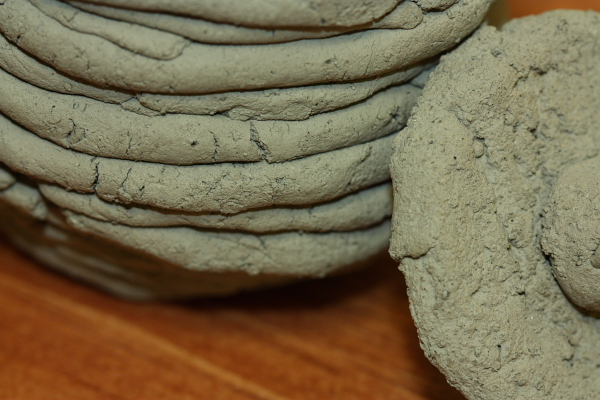
I admit I haven't got much here to share, but as the results of my "bisque firing" (read: drying in a 400F toaster oven) of this little coil pot are in and much better than expected, I'm a bit excited by what right now seem like nearly endless possibilities for future exploration. This little jar no more than ten centimeters tall is made of local clay I dug out of a wet, marshy area near my neighborhood a couple of weeks ago. Given that I have no real knowledge of pottery, let alone experience of any kind, I'm quite enthused to have produced something from this field mud that will stand up on its own. Currently it's still very rough, but my plan is to put a clay slip on it to smooth out the surface and fill in some small cracks before firing it (a bit more) properly. The end goal for this pot is to use it as a short-term storage jar for tea, using its unglazed walls perhaps to tone-down the fire of over-roasted oolongs, or mellow out musty pu'erh. Just how different teas will really react to it as a storage environment, however, remains to be seen, and that I will eventually find out relies heavily on the assumption that the clay will stand up to further processing, something I can hardly be sure of. Needless to say, there will have to be more trial and plenty of error, but this small success has left me feeling encouraged and optimistic towards finding out what can be done with basic, backyard pottery methods.

Sunday, 2 October 2011

Aged Hualien Oolong - 1987 from Camellia Sinensis

Origin: Hualien, Taiwan
Year: 1987

Today I tasted a sample of one of Camellia Sinensis' aged oolongs generously provided to me by Director's Cut from a selection of teas he picked up on a recent trip to Montreal. Knowing that my brewing is generally better during solitary sessions when I don't have to worry about guests, he offered some of his aged oolong for me to try on my own. Today being one of those cool fall days that doesn't quite merit turning the heat on, I opted to treat myself to a session with something special (this is a sample I've been holding onto for a little while to do it justice) that would also serve the purpose of warming me up.

Thicker and juicier, thanks to just what I do not know.

Even in the cold autumn air the dry leaf exhibits an abundance of sweet perfume which only intensifies as it's tipped from my wooden tea-scoop onto the warm clay of a preheated yixing teapot dedicated to aged oolongs such as this. Steaming water soon follows, the gurgling of water jostling the leaves a gentle prelude to its transformation into tea. The infusion is poured out and the aroma spills over the rim of the faircup and makes its way to my nose. The concentrated aroma flowing up from the porcelain of my sniffing cup is immediately of sweet caramel, eventually acquiring a more floral character which, as the cup cools and becomes more refined, gives the impression of what candied flowers might be like.

The liquor is thick and syrupy with no astringency and little dryness in the first few infusions. Interestingly, this tea doesn't have any clear roasty characteristics in smell or in taste, but rather a remarkable clarity and balance. I can't seem to find any sore thumbs with this tea, even the aftertaste emerges gradually and smoothly, leaving a clean mineral feeling on my tongue.

The infusions pass with seamless and gradual gradations from one to the next; the tea's character slowly becomes subtler, thinner, and more homogeneous, though some of the tea's original complexity can always be recovered with an extra-long steep. As the aroma fades into imperceptibility and I become more familiar with the tea's characteristics, I begin switching out my set of porcelain cups for Petr's wood-fired teacup, finding that the latter lends an extra hearty roundness to the liquor. I've found that this is something this cup will do for any tea I've tried it with so far, proving to me the great effect the composition of even relatively non-porous teaware can have on tea. 

Throughout the session the tea's warming chaqi from years of re-roasting builds in my centre, comforting me and making me comfortable on this cool fall day.

Monday, 26 September 2011

Finished Tea Table

Behold: the finished and also completed table.

Following beta testing, I found that making tea using a surface elevated to exactly slightly over a foot above the ground wasn't as bad as I'd thought it would be. As it turns out, it's actually quite comfortable, and should I ever feel the need to occupy a slightly more lofty perspective over my teaware, I'll use a cushion.

The finishing process for this table was pretty basic: some sanding to smooth surfaces and round corners, one coat of stain (I like the relatively light and dark areas this gives me), and varying amounts of varnish. My primary concerns in building this table were practical, and for that reason there are three coats of satin-finish varnish on the table's most utilitarian surface to protect it from spills without making it look glossy. In contrast, the wax finish on my floor dissolves every time a droplet of water touches it, and as a result much of my floor has an interesting grey-speckled pattern thanks to a previous hobby involving misting a lot of plants.

Some of the rougher sanding has left criss-cross patterns in the stain on the table's surface, an effect I personally enjoy. This is a table I anticipate keeping for quite some time, and I look forward to the accumulation of dings, scratches, and other inevitable detrital markers left by the passing of time and tea over its surface. Much in the same way as I cultivate a patina rich in stains and drip lines on my teapots with simple and loving use, I look forward to the appearance of wear on this table in all its wabi-sabi forms simply as a result of, and as a reference to, its use.

Saturday, 17 September 2011

Tea Table in Beta Testing

For the past couple months I've been meaning to start and just not getting around to making a small tea table for myself to have tea at during the winter months. Over the summer the overwhelming majority of my tea sessions have been outside on my back porch, but when the mercury drops a layer of screen doesn't provide much insulation against your average -25C winter day. I usually solve this problem by having tea at the kitchen counter, but I've been in the process of developing a more quiet space to dedicate to tea, and now I've finally got around to building a simple table to facilitate making tea there.


Today following a trip to Home Depot I built the basic structure for the table, which is what you see here in beta testing. The table's surface is now at just over a foot off the ground, and after making a few rounds of TGY on it I'm considering lowering it by about an inch. I cut the longest legs the four foot piece of lumber I bought permitted (I'll let you do the math on that one), figuring I could shorten them if needed.

In its present state the table is entirely unfinished and a bit rough around the edges, a few rounds of sanding, staining, and varnishing are in its near future. Stay tuned for the finished product (no pun intended) in a few days time.

Wednesday, 14 September 2011

Wood-Fired Teaware by Petr Novák

A package from the Czech Republic arrived at my door recently containing the wares I had ordered but a week previously from Petr Novák, a potter and tea enthusiast who has combined the two interests to create beautiful wood-fired teaware out of his kiln in, you guessed it, the Czech Republic.


Having recently started exploring tea away from the tea board (or tea sink, tea tray, tea boat, or any number of other terms) and enjoying the increased flexibility this affords me, I picked up this bowl and vase as well as a cup to add to my modest collection of tea wares.

The ribs which circle the outside of the vase are slightly unevenly spaced, betraying its handmade origins and adding interest to the piece (while the cup and bowl are by Petr, the vase is by Mirka and has the stamp "MR" on its underside). The texture is very rough, especially between the ribs, but the base is well made and the vase doesn't wobble. While the inside is glazed to avoid leaks, the clay on the outside appears bare. I'm not sure whether this piece was charcoal glazed or not to achieve its dark colour, but in any case the way the dark colour anchors the gaze and provides a stable and interesting root without drawing too much attention away from the flowers it's meant to display pleases me.

The bowl is similarly well made, with an even shape that highlights its finish. The glaze is off-white, thick, and bumpy on one side, gradually thinning and letting a carroty orange come through on the other side. Crackling in the glaze is most obvious where it's thinnest and will eventually accumulate seasoning as it's used, increasing contrast and slowly transforming the piece.


The cup comfortably holds a full infusion from the teapot pictured in this post (about 90ml) which cools to a drinkable temperature at a similarly comfortable speed thanks to its thin walls. The glaze covers the inside and extends to just over the rim, allowing its holder to feel and admire the clay from which it was made while providing a smooth surface from which to drink. The colour of the inside glaze is an off-white with a slight olive tint, attractively showing off the colour of darker oolongs such as the charcoal roasted Anxi tieguanyin I drank from it today. Intricate swirls of various translucent shades trickle down into the bottom of the cup from the rim; a treat for the inquisitive observer.  The wood firing has caused the bare clay to become a significantly darker shade of orange-brown than the other, obscuring the small stones dotted throughout the clay.


A beautiful and functional set of wares, you can bet these will be featuring in future posts.

Sunday, 11 September 2011

Some Fresh Yixing


This is my new teapot. I like it very much.

Director's Cut recently made a weekend trip to Montreal and picked up this little gem (along with a bunch of tea, of course) from Camellia Sinensis. A couple of weeks and a dozen or so sessions later, he decided 90ml steeps aren't really his preference, so, figuring I could get better use out of it, he sold it to me. The clay is porous enough that it had already accumulated some cosmetic outside seasoning in its short stint with DC, so I figured it wouldn't suffer much of a setback if I got rid of said seasoning and gave it a fresh start.

Conventional wisdom says to never use detergent or a cleaning agent of any kind on a clay teapot, lest it should become impregnated in the clay and ruin it forever, but because MarshalN has been routinely bleaching his teapots now with no adverse effects that I can gather and because I've learned not to trust conventional wisdom when it comes to yixing (conventional wisdom often being profit-motivated and sometimes arbitrary from what I can gather), I bleached it. The pot and lid soaked in a dilute Javex bath for a little over an hour before being pulled out and rinsed again and again. After being rinsed in a half dozen baths of boiling water and subsequently soaked overnight in a bowl of hot water with some tea thrown in, the smell of bleach was gone. The first couple of post-bleach sessions with this teapot had a bit of roughness in the aftertaste usually characteristic of pesticides, but at the time of writing the pot bears no indications of having been bleached.

In order to better equip myself to decide which teas to make in this pot, I poured some 85C water through it just to see what the clay on its own will do. DC told me that this teapot is made of some great clay, and I'm inclined to agree with him. It has great energy and lends the water a very deep and full feeling in the mouth. The most notable characteristic seems to be a mineral aftertaste I normally associate with yancha, making this seem the most intuitive pairing. In practice, for whatever reason the way this pot renders yancha is unbalanced, and is actually much better suited to traditionally processed TGY. Surprisingly, despite the porosity of the clay, this pot is high-fired enough to produce an aromatic but also round and full baozhong.

So far, this teapot seems very versatile, but the degree to which the clay accumulates seasoning leads me to believe that I'll have to eventually settle on a genre. In the meantime, my plan is to continue experimenting and searching for that ideal balance between a tea that pairs well and a tea that will ensure the pot gets used.

Saturday, 3 September 2011

Whoops: Competition Muzha TGY

As it turns out, my assertion that the level of roast applied to the particular competition Muzha TGY mentioned in this post was unusually high was a bit misguided. In fact, the amount of roasting on this tea is more or less typical for an awarded example, it's just that roasted teas in general are not awarded quite so often. I've changed a couple of lines in the original article and added an addendum for the sake of accuracy.

If you're not too interested in the relative popularity of tea genres or associated bias in a competition environment, then I apologise for having wasted your time. Please accept this picture of a leaf in some water as compensation:

Friday, 26 August 2011

Competition Muzha TGY

Tea: A high-roast awarded Muzha tieguanyin from Elliot Knapp
Origin: Muzha, Taiwan

Many thanks to Elliot for generously providing me with this a sample of competition TGY from his stash purchased from Houde. Elliot talks about the tea on his own blog here.

This tea is a rather special one in several ways, the first and most obvious one being that it's competition grade and will be my first taste of awarded tea. Likewise, I have yet to find out the effects of the Taiwanese terroir on tieguanyin oolong, a variety best known for its roots in mainland China. Probably the most interesting and particular characteristic, however, is the level of roast used on these leaves during processing. To paraphrase Elliot, though not a traditionally processed TGY (traditional processing being very high levels of roasting and oxidation, more or less the opposite of most TGY sold in shops nowadays), the amount of roasting this tea was subjected to is unusually high as compared to the kinds of teas which are usually awarded in competitions (judges with modern tastes are developing more and more bias towards greener oolongs).

What with all the unfamiliar territory, I was pleasantly surprised to find that this tea bears many similarities to an aged oolong. Upon bringing the aroma cup up to my nose my first impression was of caramel sweetness, doubtless a product of the roasting applied to the leaves. This scent then evolved into the domain of fruits and flowers (with a clear note of lilacs in the second infusion; something I associate with the very few examples of green TGY I've actually liked), and finally something resembling roasted coffee. The caramel and roast remain fairly constant throughout the first four or five infusions, though the scents gradually open later and later before disappearing altogether.

The taste of this tea is tough to describe, I think because it didn't seem to have any particular flavours which stuck out and thus were easy to identify. All aspects of the flavour profile fitted into each other so seamlessly that I didn't really notice any particular notes of dark fruit or roast that would be expected of a traditionally processed TGY (though the processing on this one is not quite traditional, it's my closest frame of reference). The overwhelming impression is of the mouthfeel, which was impeccably smooth. No roughness, no astringency, no sourness. No wonder it stood up in competition.

In his review, Elliot remarks that the tea doesn't show as much endurance as some of the other oolongs he's partial to, and though I eventually got a good number of flavourful brews out of it, the character of the tea went through a turning point around the fifth infusion and changes dramatically. Whereas in earlier infusions, the brew was incredibly well balanced with no flavours out of place, a distinct vegetal note first emerged in the aftertaste and then grew to fill the whole cup. Brewed a bit cooler and with longer infusions, I found this cool, green, and slightly sour taste refreshing, though perhaps that's because I'm used to finding it in an aged oolong that's on its way out.

On the whole, I thoroughly enjoyed exploring this unfamiliar territory and learning a bit about what makes a competition tea, albeit one which is less than standard fare. Variety is the spice of life, as they say, and I hope to see more not-so-green teas recognised in the future.

Edit and Addendum on September 2, 2011: As it turns out, my assertion that the level of roast applied to this particular competition Muzha TGY was unusually high was a bit misguided. In fact, the amount of roasting on this tea is more or less typical for an awarded example, it's just that roasted teas in general are not awarded quite so often. For the record, the roasting was electric.

Thursday, 18 August 2011

Redressing the Balance

The past few weeks for me have been quite hectic and, as far as tea goes, unusually characterised by a lack of meaningful experiences (hence a similar lack of posts). I've been seemingly chronically out of form and as a result the tea I've been drinking has generally not been as good (plagued by astringency, fragrances that never open up, and vegetal notes that used to and should be subtle sticking out like a sore thumb); a real shame as I've been sharing tea with friends old and new more than ever recently. Whereas a solitary, meditative half-hour (or hour when I could find one in which I'd be left undisturbed) by my kettle used to be a daily routine, since the end of July I've had only a handful of these sessions.

I've always found the tea that I brew for myself to be better than the tea prepared for a group tasting. I suppose I shouldn't be surprised or embarrassed by this; navigating the ever-changing subtleties of any social situation is a perennially downplayed and undervalued skill, add to that trying to feel your way through making a good cup of tea and all the variables associated with it without any instruments while always staying on top of the conversation, and you've got yourself a sizable challenge. The real world, as it turns out, is a rather messy place, and having been jolted out of the moment during private tea sessions by everything from the family dog barking at the mailman to an unexpected visit from my grandparents, achieving an atmosphere of quietude with the mixed gatherings I've been hosting in the past little while is a tall order.

Having tea alone has always been de-facto "me time", and not having it recently has left me feeling unbalanced. When I drink tea by myself I try not to do anything but enjoy the tea I'm drinking. I strive to appreciate the finer qualities of a tea as well as the ones I'm not so fond of. Rough or smooth, fragrant or muted, tea is what it is, and I try to do nothing more than experience the moment I'm in as fully as I can without passing judgement. Admittedly, I'm not great at it, but even in just making a stab at fully appreciating a tea, everything else gets put aside. The result is that for a little while I don't worry about school deadlines, work stress, social conflicts, or any of the other stresses of everyday life.


Out of all of this I take a lesson in the value of taking time for yourself, but especially in the value of spare and simple experiences in general, experiences which don't bombard you with so much information that has to be sorted and prioritized before the task of processing any part of what's been presented can be addressed, and instead feed only what can be processed in real time. In short, the value of being fully in the present moment. I've always enjoyed my solitary sessions, but thanks to the contrast a few weeks of switching them out for group tastings, I'll have a greater appreciation both for the tea brewed and the time to think.

Monday, 1 August 2011

Da Fo Longjing - Spring 2011 from World Of Tea

Tea: Da Fo Long Jing from World Of Tea
Origin: Zhejiang, China
Harvest: Spring 2011

First off, I should point out that long jing (and, in fact, greens in general) is a genre of tea I know little about. When it was sold to me a couple of months ago by a seriously jet lagged Jean (one of the small shop's co-owners) just back from this year's Asiatic trek to buy a fresh supply of teas, I was told that this particular long jing was pretty good, but not the best. Never having tried a long jing before, this suited me just fine. What with this genre's reputation for being tricky to brew gongfu-style, I thought I'd give it a few practice sessions before posting some tasting notes and in the meantime keep it as fresh as I could by not opening it too often and storing it in the fridge.

As I sit down to start the session that will form the basis of this post I crack open the airtight seal on the bag of leaves and inhale deeply as is my custom. Because the leaves still cold from their refrigerated storage I can't smell much at first, but as the leaves warm up a little and especially with the aid of the heat from my gaiwan a thick, oily, leguminous scent is released; it's the kind of thick scent that reaches into the back of your mouth and tickles your salivary glands. I don't often feel like drinking greens, but when I do and I open up this package the need becomes strong.

I prepare the first infusion and the first thing that's apparent is the colour of the liquor: light translucent green. A top quality long jing should be more or less clear; this one isn't, but then it isn't a top quality long jing. To my unpracticed eyes, however, it still looks as though it's hardly been steeped.

Rolling the liquor around in my mouth, the initial pan-fried oily smoothness rapidly gives way to a semi-floral, semi-leguminous sweet character. The aftertaste is cooling and fresh.

I push the second infusion a bit farther, and in tasting it the results are obvious. A new sharp bitter note immediately surfaces and subsides just as quickly into a pleasant coolness. This tea feels great on a warm summer day, the cooling feeling in the mouth leads up to cooling chaqi flowing throughout the body and I notice that the air pushed over me by the ceiling fan on my back porch now feels a perfectly pleasant temperature. At the same time the yang qi trapped within the arrested growth of the buds blossoms inside of me, leaving me feeling fresh and awake.

This tea doesn't have the same endurance as the oolongs with which I am more familiar, taking a dive after about the fourth infusion, but considering that this is a green tea and not an oolong, I'm quite happy with its stamina and move on to inspecting the spent leaves. They're a little bit broken and there's the odd leaf floating around on its own, but in general this tea is made up of downy sets of two leaves and bud. Every time I scoop the tea out of its bag, the scoop comes back covered in thousands of tiny trichomes. That, to me, is a good sign.

In the end, I am most taken with this tea's vivacity. From the moment I open the bag to the last cup washing down my throat its qi is apparent. Though it lacks the subtlety or gentle qualities of other teas in this regard, I always end my sessions with this tea feeling calm, energized, and ready to start my day.

Trichomes